If you are trying to figure out how to measure a head for a hat, do not overcomplicate it. Most people either guess, pull the tape too tight, or assume every hat will fit the same way. That is usually where the trouble starts.
A hat can look great online and still feel wrong the second it is on your head. Too tight and it gets annoying fast. Too loose and it never sits properly. That is why a clean measurement matters, whether you are buying from a custom caps maker or just trying to find one hat that does not end up shoved in a closet.
A good fit is not some tiny detail. It is the whole starting point.
Why Hat Size Matters More Than People Think
People act like sizing is boring, and the style is the fun part. Fair enough. But the style does not matter much if the hat feels bad after ten minutes.
A hat that is too tight can leave marks, press into your forehead, or just feel distracting all day. A loose one slides around, drops too low, or never quite looks settled. That goes for everything from everyday custom baseball caps to softer, casual hats and dressier shapes.
The other thing people forget is that sizing affects how the hat looks, not just how it feels. A cap that is meant to sit clean and close can start looking bulky if it is too big. A softer hat can end up looking sloppy when it was supposed to look relaxed. Even the perfect hat can disappoint you if the size is off.
That is why it makes sense to measure your hat size properly before buying instead of taking a lucky guess and hoping for the best.
How Are Hat Sizes Measured?
Most hat sizing comes down to one thing. Head circumference.
That is the basic number brands use. You measure around the part of your head where the hat is actually going to sit, then turn that measurement into a hat size using the brand’s chart. Some companies use exact measurements. Some switch that number into small, medium, large, and so on. Different system, same starting point.
The actual process is simple. The part that throws people off is where they place the tape and how tightly they pull it. That is usually where bad measurements come from.
What You Need Before You Start
You do not need much.
A soft measuring tape is the easiest option. If you do not have one, use a string or ribbon and then lay it flat against a ruler. A mirror helps, mostly so you can see if the tape is sitting level. A second person can help, too, but you can absolutely do this on your own.
That is it. No special tool. No fancy trick.
How to Measure a Head for a Hat Step by Step
Start with the tape around your head, not too high, not too low. For most hats, you want it sitting about one finger above the eyebrows and one finger above the ears. Then bring it around the widest part of the back of your head.
That spot matters. A lot.
The tape should feel snug, but not too tight. Consider it like this. You’re attempting to replicate the way a well-fitting hat would sit, not force your head into a smaller size. People constantly make this mistake by tugging too hard.
Once the tape is in place, ensure that it is level all around. If it is too high in the front or too low in the back, the number may be incorrect. Read the measurement in inches or centimeters, write it down, then repeat it once again to ensure accuracy.
That second measurement helps more than people think. If you get the same number twice, great. If not, do it again until it is consistent.
Where the Tape Should Sit
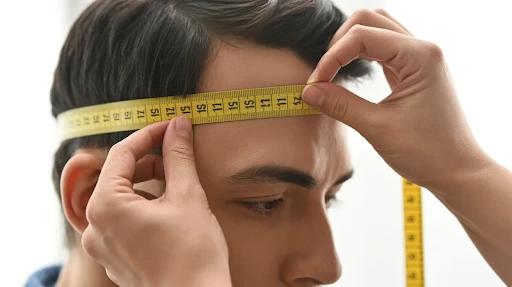
This is the part people rush, and it is usually the reason they get a bad result.
The tape should not sit high up near the crown unless the hat is meant to sit there, which most are not. It also should not dip too low over the brows or ears unless you are measuring for a style that sits deeper. For general measuring, stay around the natural hat line. Slightly above the brows, slightly above the ears, around the fullest part at the back.
That gives you the most useful baseline.
It also matters because different hat styles do not all sit the same way. A structured cap, a soft winter hat, and a broader dress hat can feel different even when the head measurement is identical. The number gets you started. The style still matters after that.
Why One Measurement Does Not Answer Every Fit Question
This is where people get annoyed, but it is true.
Your head measurement gives you the size range. It does not magically tell you how every hat will feel. Some styles sit deeper. Some sit higher. Some hug their heads. Some soften with wear. A beret hat is not going to feel the same as a fitted cap, even if both are technically the right size.
That does not mean the measuring step is less important. It just means the tape gives you the foundation, not the full story. Fit still changes a little depending on the hat shape and build.
A Few Common Measuring Mistakes
The most common mistake is pulling the tape too tight. That usually ends with people buying hats that feel fine for one minute and annoying after that.
The next mistake is going too loose, which can leave you with a hat that shifts or sits lower than it should. Then there is the lazy version, where someone measures once, gets a rough number, and decides that is close enough. Sometimes close enough works. A lot of times it does not.
People also forget that individual hat styles fit differently. The measurement matters, but it is not the same thing as a guaranteed perfect fit across every style.
Why This Matters Even More for Some Hat Types
Some hats are more forgiving than others. That is just the truth.
Soft hats can sometimes give you a little room. Structured hats usually do not. Firm-front caps, fitted styles, and heavier-built shapes tend to show a bad size more quickly. That includes a lot of structured options like custom trucker caps and many embroidered styles, too.
And once you get into broader styles like cowboy hats, the way the hat balances on your head becomes even more obvious. The wrong size is hard to ignore.
How to Use Your Measurement Once You Have It
So you measured your head. Good. Now what?
Now you take that number and match it to the brand’s sizing chart. That is the part people rush, then regret later. One brand’s medium is not always another brand’s medium. Some labels run a bit tighter. Some have more room. Some convert in inches, some in centimeters, and some simplify everything into small, medium, large, and extra large.
That is why your head measurement matters more than the letter on the tag. The number gives you something real to work with.
This is also where people start looking through collections of hats and assume the size will stay the same across every shape. Sometimes it does. Sometimes it absolutely does not. The chart gets you close. The style still matters after that.
Hat Sizes for Men’s Hats and Other Sizing Notes
A lot of people ask about hat sizes for men’s hats, but the truth is, the measuring process itself is not wildly different. Head size is head size. What changes more often are the shape of the hat, the way the brand cuts it, and who the style is designed for.
Some hats are marketed by gender, but the real issue is usually fit preference, not some totally separate measuring system. One person may like a closer fit. Another may want a little more room. One brand may shape the crown differently. Another may make the head opening feel smaller even when the stated size is the same.
So do not get too hung up on the label. Focus on the number first. Then look at the shape.
Materials Can Change the Fit Too
People talk about size like the fabric has nothing to do with it. It does.
Some materials loosen a bit with wear. Some stay almost exactly the same. Some have a tiny bit of give. Others do not forgive you at all. Wool can settle. Cotton can soften. Structured synthetic builds can feel firmer and hold their shape more stubbornly.
This matters because the same size can feel different depending on what the hat is made from. A soft knit piece may feel more flexible than a structured cap from a line of custom embroidered caps. A winter cap with lining may feel slightly snugger than a lightweight summer one, even when the size chart says the number is identical.
That is not the chart being wrong. That is the material changing the experience.
A Quick Note on Sizing Videos and Brand Guides
A lot of brands now include a hat sizing video or a visual guide to help people check the tape placement. Honestly, that can be helpful if you are the kind of person who reads instructions, nods, and then somehow still puts the tape in the wrong place.
Visual demos are useful because they show how the tape should sit, how snug it should feel, and what “level all the way around” actually looks like. That can save a lot of second-guessing.
The same goes for brand-specific size pages. If a company has a chart and clear notes, use them. A general guide helps. A brand’s own fit notes usually help more.
Why Brands With Better Fit Guidance Stand Out

This is one of those things people only appreciate after a bad purchase.
A brand that gives clear fit notes, real size charts, and honest advice is just easier to buy from. That matters whether you are shopping from a big retailer or looking at a range of luxury hats from a smaller specialist label. Good guidance saves returns, saves hassle, and usually means the brand actually understands its own products.
It matters in practical, everyday categories too. Even brands offering custom beanie caps or other relaxed styles still do better when they explain the fit clearly instead of acting like “one size fits all” solves everything.
Usually, it does not.
Frequently Asked Questions
How do I measure my head if I do not have a soft tape measure?
Use a flexible material such as thread or ribbon. Wrap it over your head, where the hat will sit, and then flatten it against a ruler or measuring tape. It works well as long as you maintain it level.
Should I size up if I am between hat sizes?
Usually yes. A little bigger hat is usually simpler to deal with than one that seems too small. Simply ensure that the style can accommodate a bit more space without seeming out of place.
Why does the same size feel different in different hats?
Because the form, material, lining, and workmanship all affect the fit. The measurement provides a starting point, but not every hat fits precisely the same way.
Are adjustable hats easier to buy than fitted hats?
In most circumstances, the answer is yes. Adjustable options allow you to fine-tune the fit, making them ideal for gifting, group orders, and everyday use. They still require the proper general form, however.
How do I know if a hat fits properly after it arrives?
Wear it for a while rather than just putting it on for a second. A proper fit should be secure, comfortable, and sturdy, with no pinching or sliding about.
Final Words
Learning how to measure a head for a hat is not difficult, but it requires some care. Measure in the correct location, maintain the tape level, do not pull it too tight, and double-check the number. After that, go to the size chart, consider the style, and keep in mind that fabric and form might affect how the hat feels.
That’s the true recipe. Get those things right, and you’ll have a lot greater chance of selecting a hat that truly feels nice when worn.
Related Articles: